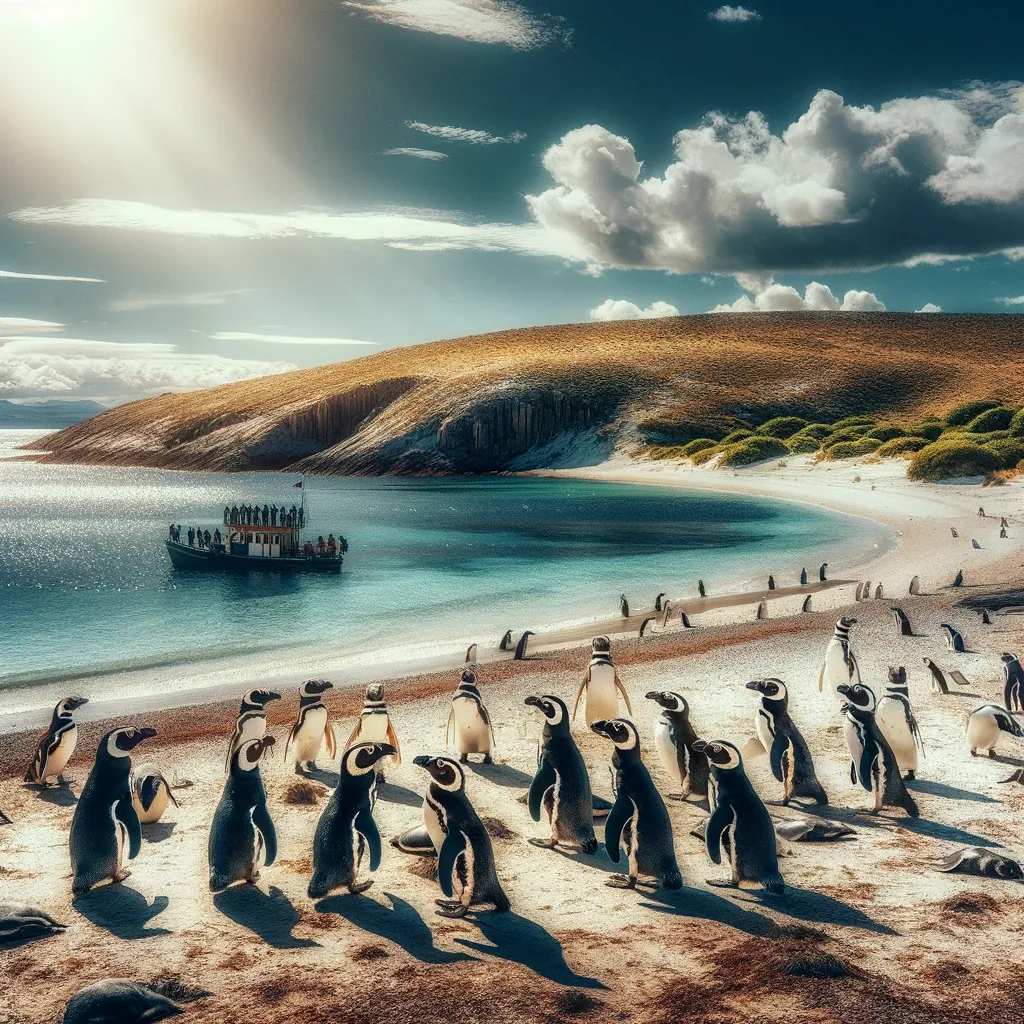
Visit Isla Magdalena, home to over 100,000 Magellanic penguins in the Strait of Magellan near Punta Arenas. This remote island sanctuary offers an extraordinary close encounter with one of South America's largest penguin colonies, reachable by a two-hour ferry from the southernmost city in continental Chile.
Updated for 2025–2026 Season
9 min read
By PatagoniaHub Travel Team|Verified local expertsLast updated: Jul 4, 2026
Chile, Magallanes6 highlights
Rising from the cold, windswept waters of the Strait of Magellan, Isla Magdalena is a small, treeless island that transforms each spring into one of the great wildlife spectacles of the Southern Hemisphere. From October through March, over 60,000 breeding pairs of Magellanic penguins arrive to nest in burrows dug into the sandy soil, filling the island with a cacophony of braying calls and the comic waddle of these charismatic birds. The island, along with neighboring Isla Marta, was designated the Monumento Natural Los Pinguinos in 1966, protecting the colony and the surrounding marine ecosystem.
What makes Isla Magdalena extraordinary for visitors is the intimacy of the experience. A marked walking trail leads from the landing jetty to the island's historic lighthouse and back, and the penguins show almost no fear of humans, waddling across the path, nesting within arm's reach, and going about their daily routines as you stand among them. The two-hour ferry ride from Punta Arenas crosses the Strait of Magellan, often accompanied by dolphins, cormorants, and South American sea lions, making the journey itself a wildlife adventure.
For travelers driving through southern Patagonia, Punta Arenas serves as a natural hub between Torres del Paine and Tierra del Fuego. Adding a half-day excursion to Isla Magdalena turns a transit stop into one of the most memorable wildlife encounters in all of Patagonia. The experience rivals the far more expensive and difficult-to-reach penguin colonies of Antarctica or the Falkland Islands, at a fraction of the cost and effort.
Walk among one of the largest Magellanic penguin colonies in the world. The marked trail passes directly through the nesting area, allowing you to observe penguins feeding chicks, preening, socializing, and commuting between their burrows and the sea. The proximity is astonishing, with penguins often crossing the path within a meter of visitors.
Historic Lighthouse (Faro Isla Magdalena)
culture
The island's red-and-white lighthouse, built in 1902, stands at the highest point and now houses a small museum about the island's natural history and the penguin colony. The panoramic view from the lighthouse reveals the full scale of the colony spreading across the island, with penguins visible in every direction to the shoreline.
Strait of Magellan Ferry Crossing
wildlife
The two-hour ferry ride from Punta Arenas is a wildlife experience in its own right. Keep watch for Commerson's dolphins (the striking black-and-white dolphins endemic to this region), South American sea lions, skuas, giant petrels, and various cormorant species. The crossing offers panoramic views of Tierra del Fuego and the continental coast.
Isla Marta Sea Lion Colony (View from Boat)
wildlife
Many ferry services pass close to Isla Marta, a rocky island home to a large colony of South American sea lions and sometimes a handful of Humboldt penguins. While landing is not permitted, the boat passes close enough for excellent wildlife viewing and photography of the lounging sea lions.
Penguin Photography Opportunities
wildlife
Isla Magdalena is one of the best locations in the world for penguin photography. The birds are habituated to human presence and engage in photogenic behaviors at close range. The island's open landscape provides clean backgrounds, and the low southern light creates dramatic conditions, especially on partly cloudy days.
Subantarctic Flora and Coastal Landscapes
nature
Beyond the penguins, the island's windswept landscape of low grasses, coastal cliffs, and tide pools has a stark, otherworldly beauty. The treeless terrain stretching to the horizon under vast Patagonian skies provides a powerful sense of place at the edge of the known world.
Best Time to Visit
☀️
summer
December - February
Cool days (8-15°C) with strong winds. Long daylight hours (up to 17 hours in December). Weather can change rapidly with sunshine, clouds, and wind gusts within the same hour.
Busy
Peak penguin season when chicks are growing and the colony is most active. Book ferry tickets at least a week in advance. January offers the best chance of seeing fluffy penguin chicks.
🌸
spring
October - November
Cold (3-10°C) with frequent strong winds and possible rain. Penguins are arriving and establishing nests.
Moderate crowds
Early season offers fewer crowds and the excitement of watching penguins arrive and court. The ferry schedule may be more limited. Dress very warmly for the crossing.
🍂
autumn
March - April
Cooling rapidly (3-10°C) with shorter days and increasing wind and rain. The penguin colony begins to thin as adults and fledglings depart for the sea.
Low crowds
March still offers good penguin viewing as juveniles prepare to fledge. By April, the colony is largely empty. Ferry services become less frequent and may cancel due to weather.
Ferries depart from the Punta Arenas port, typically in the morning. The main operator is Transbordadora Austral Broom (Tabsa) and several tour companies offer packages. The crossing can be rough in the Strait of Magellan; take seasickness medication if prone. The entire excursion takes approximately 5-6 hours including 1 hour on the island.
Punta Arenas (by zodiac/speedboat)
ferry
1-1.5 hours each way
$100-160 USD per person
Smaller zodiac-style boats offer a faster, more adventurous crossing but are more weather-dependent. These trips sometimes include closer approaches to Isla Marta and more time on Magdalena. They are bumpier and wetter, so dress accordingly.
Santiago (to Punta Arenas)
flight
3.5 hours flight + 2 hours ferry
$150-400 USD (flight) + $80-130 USD (ferry)
Fly into Presidente Carlos Ibanez del Campo Airport (PUQ) in Punta Arenas. Multiple daily flights from Santiago. Rent a car at the airport to explore the region and drive to the ferry terminal. Combine with visits to Torres del Paine, Tierra del Fuego, and the broader Magallanes region.
Where to Stay
Hostel
$20-40/night/night
Punta Arenas has numerous hostels and budget accommodations near the central plaza and waterfront. Hostal La Estancia or Hostel Keoken are popular choices. Stay central to be close to the ferry departure point and restaurants.
Mid-Range Hotel
$60-120/night/night
Comfortable hotels like Hotel Jose Nogueira or Hotel Dreams del Estrecho offer good value with breakfast included and central locations. Book a room with a view of the Strait for atmospheric evening vistas.
Boutique Hotel
$120-250/night/night
Several heritage buildings in Punta Arenas have been converted into charming boutique hotels. Hotel La Yegua Loca and Singular Patagonia (slightly outside town) offer upscale experiences with excellent dining.
Driving Tips
1There is no driving on Isla Magdalena itself. The drive is to Punta Arenas, where you catch the ferry. If driving from Torres del Paine, allow 5-6 hours on Ruta 9 to reach Punta Arenas.
2The ferry terminal in Punta Arenas is centrally located and easy to find. Arrive at least 30 minutes before departure. Free street parking is available near the terminal, or use a paid lot for longer stays.
3If renting a car in Punta Arenas, this is an excellent base for combining Isla Magdalena with drives to Fuerte Bulnes (60 km south), Otway Sound penguin colony (65 km north), and the Tierra del Fuego ferry crossing.
4Wind is the defining driving condition in the Magallanes region. Strong gusts can push vehicles sideways, especially on exposed coastal roads. Keep both hands on the wheel and reduce speed on windy days.
Local Tips
Compare This Destination
See how this destination stacks up against others. Compare climate, highlights, transport, accommodation, and costs side by side.
The colony hosts approximately 60,000 breeding pairs, meaning over 120,000 adult penguins during peak season, plus their chicks. At the height of the season (January), the total population including juveniles can approach 200,000 birds. It is one of the largest Magellanic penguin colonies in South America.
Can I touch the penguins on Isla Magdalena?
No. Visitors must stay on the marked trail and maintain a respectful distance from the penguins. However, the penguins themselves often approach the trail and cross directly in front of visitors, sometimes stopping within arm's reach. Never touch, feed, or chase the birds. They are wild animals protected by Chilean law.
What happens if the ferry is canceled due to bad weather?
Cancellations due to high winds and rough seas are common, especially outside of peak summer. Operators typically offer rebooking for the next available day or a full refund. Build flexibility into your itinerary by planning the excursion early in your Punta Arenas stay, leaving alternative days if the first attempt is canceled.
Is Isla Magdalena worth visiting if I have already seen penguins at Otway Sound?
Cold (0-5°C) with harsh winds, rain, and limited daylight. The penguins are at sea and the island is empty.
Low crowds
The island is closed to visitors during winter as the penguins are away. No ferry services operate. Plan your visit between October and March.
1Book your ferry to Isla Magdalena as early as possible, especially for December-February visits. Tours can sell out days or even weeks in advance during peak season.
2Take seasickness medication 30 minutes before boarding if you are at all susceptible. The Strait of Magellan crossing can be rough with significant swells, particularly on the return trip when afternoon winds pick up.
3Bring binoculars for the ferry crossing to spot dolphins and seabirds. A telephoto lens (200mm+) is ideal for Isla Marta sea lion viewing from the boat, though on Magdalena itself the penguins are so close that a standard lens works perfectly.
4You have approximately one hour on the island. The walking circuit is about 1 km and well-marked. Do not rush. Take time at the lighthouse viewpoint and simply sit near the penguins to observe their behavior.
5If your Isla Magdalena ferry is canceled due to weather (this happens frequently), the Otway Sound penguin colony (Seno Otway) is a land-based alternative accessible by car, 65 km north of Punta Arenas. The colony is smaller but still worthwhile.
Absolutely. The Otway Sound colony is much smaller and the viewing experience is more restricted. Isla Magdalena offers a dramatically larger colony, closer encounters, and the added adventure of the Strait of Magellan crossing with dolphin and sea lion sightings. The two experiences are quite different in scale and atmosphere.
How long do I spend on the island?
Ferry operators allow approximately one hour on the island. This is sufficient to walk the entire loop trail, visit the lighthouse, and spend quality time observing and photographing penguins. The time feels short but is well-structured. Some speedboat operators offer slightly longer island time.
What should I wear for the Isla Magdalena excursion?
Dress in warm, windproof, and waterproof layers. Even in summer, the wind chill on the Strait can make it feel near freezing. Wear sturdy, closed-toe shoes for the island trail. Bring gloves, a warm hat, sunglasses, and sunscreen. A waterproof outer layer is essential for sea spray during the crossing.
Are there penguins on Isla Magdalena year-round?
No. Magellanic penguins are migratory. They arrive at Isla Magdalena in September-October to breed, lay eggs, and raise chicks. By March-April, adults and fledglings depart for the sea, spending winter months as far north as southern Brazil. The island is closed to visitors from approximately April to September.
Can children visit Isla Magdalena?
Yes, the excursion is suitable for children of all ages who can walk the 1 km trail. Children typically love the close penguin encounters. However, the ferry crossing can be rough, so seasickness medication is recommended for kids prone to motion sickness. The island trail is flat but can be windy.